build
Loop HQ
One person running many AI coding sessions across six products. Builders and independent reviewers, and nothing ships without a person.
the problem
I was building with AI and running parallel tasks that just weren't moving fast enough.
why it hurts
One person cannot watch many AI sessions at once, and a builder left unchecked will report work as done when it is not.
what i built
Loop HQ: one overview session that hands work to many Claude Code cloud sessions across six products, builders checked by independent reviewers, hard stops before anything reaches production, and one screen that shows every session. I designed it and run it.
how it works
Keep builders and reviewers apart.
whyThe reviewer runs on a stronger model and is asked to find what is wrong. It caught a builder falsely claiming a staging environment was missing, and a change that would have shifted a live button.
Stop at a pull request.
whyShipping to production is never the loop's call, so it can run for hours unattended without putting the live product at risk.
Stop when a check fails.
whyA task that fails a check twice stops and reports, the loop winds down at 90 per cent of a usage window, and hooks block unsafe pushes.
in detail
One loop, checked at every step, and one screen that shows every AI session in it.
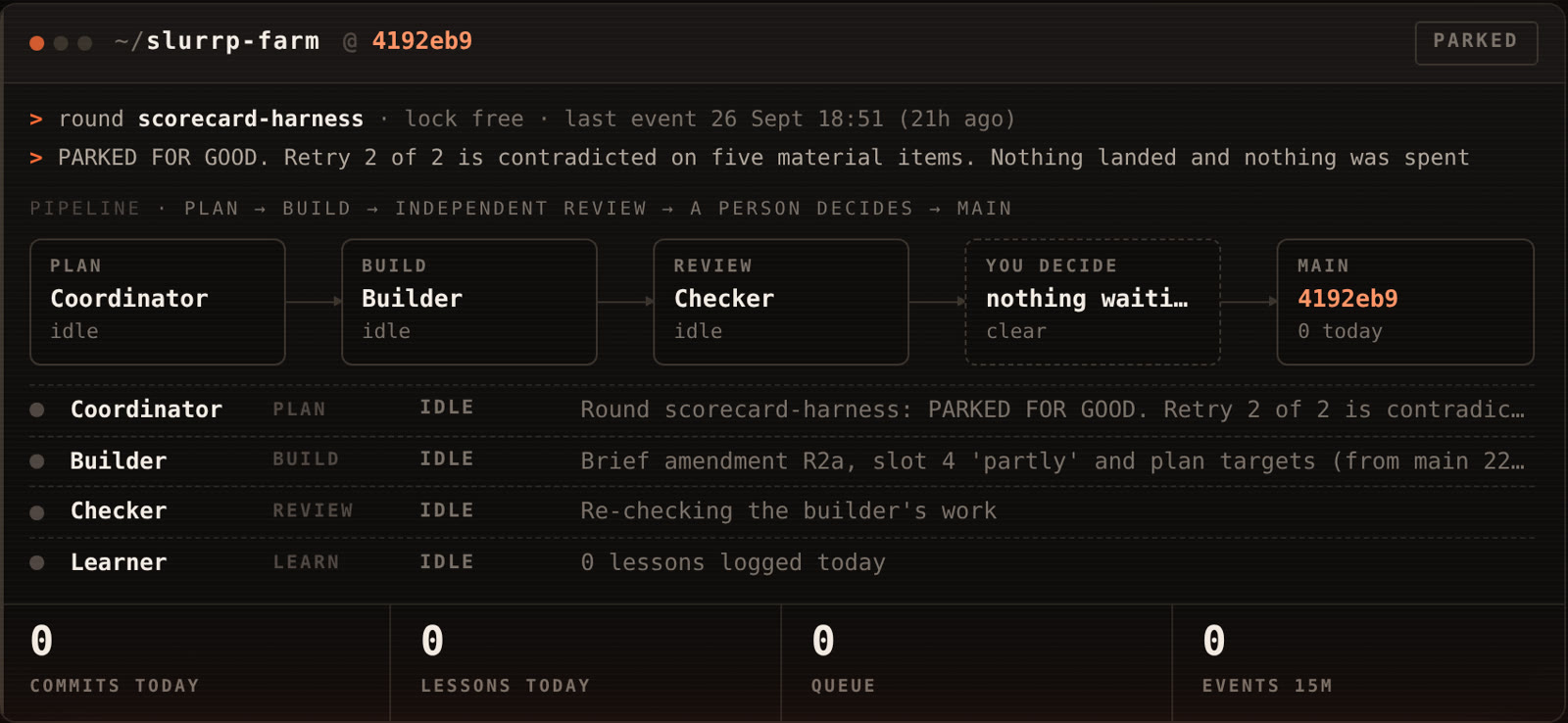
Every change takes the same path
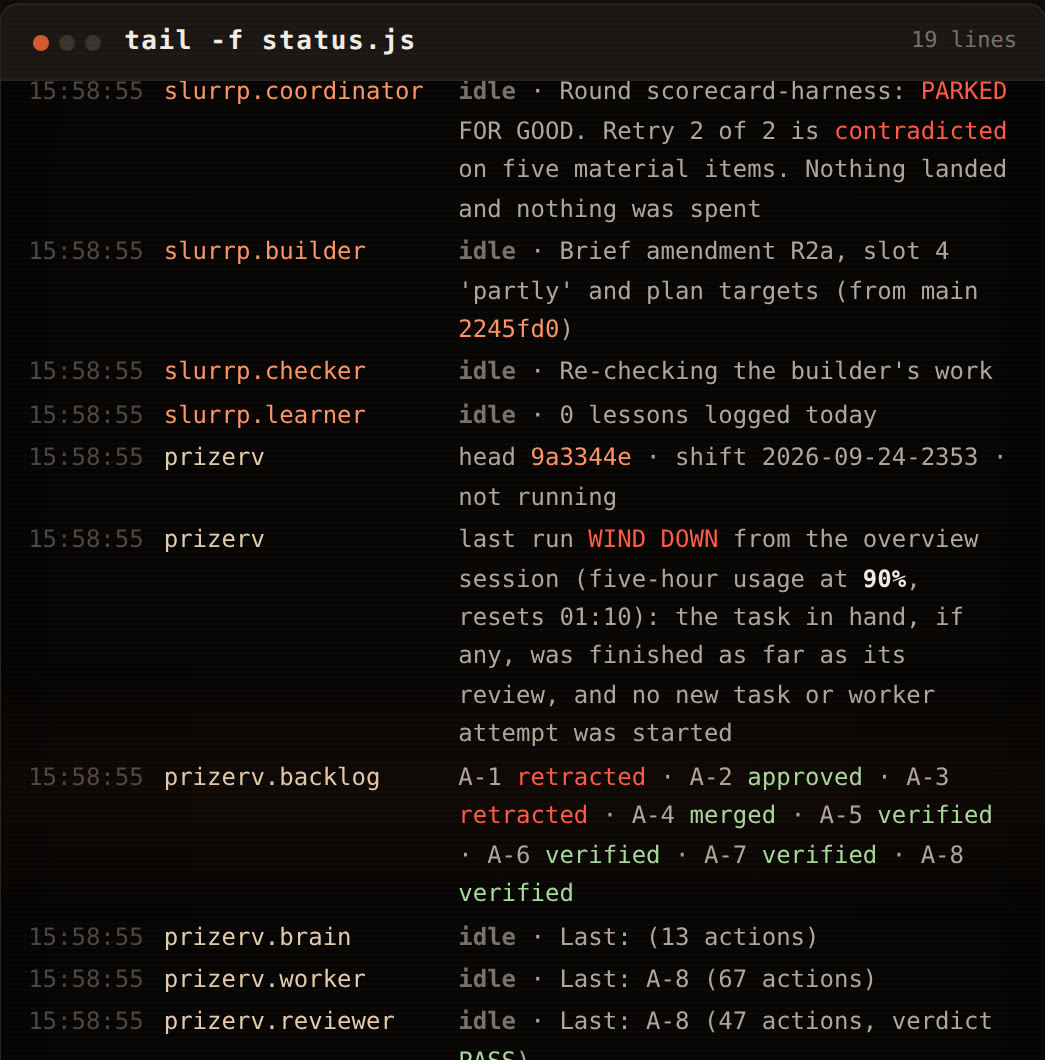
Plan, build, independent review, a person decides, then main. Here the Slurrp Farm loop has parked a round after its second retry was contradicted: nothing landed and nothing was spent.
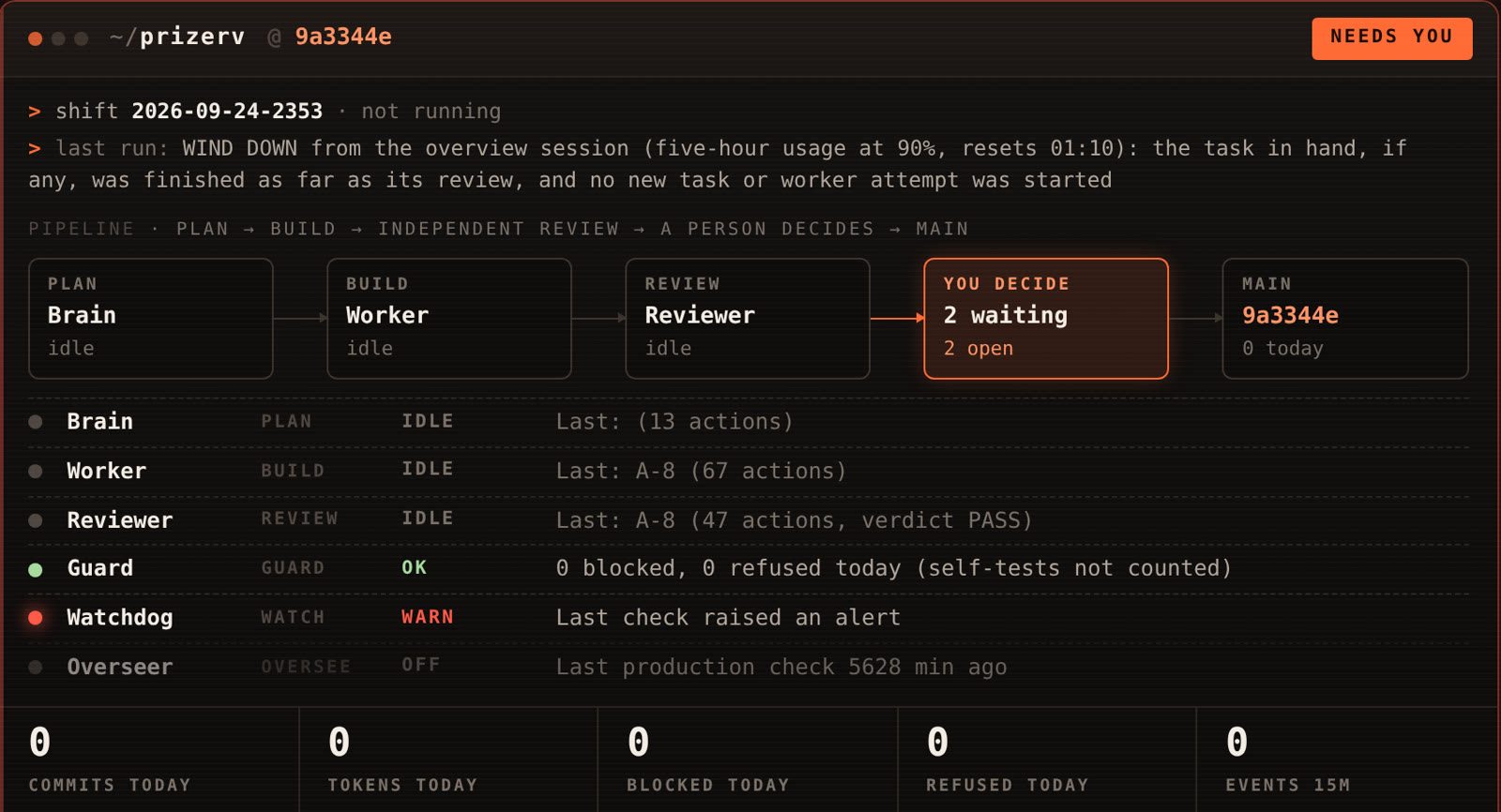
Guards, caps and a person at the end
The guard counts what it blocked and refused, a watchdog raises alerts, and the Prizerv loop wound down at 90 per cent of its five-hour usage window. Work that needs a decision waits under "You decide".
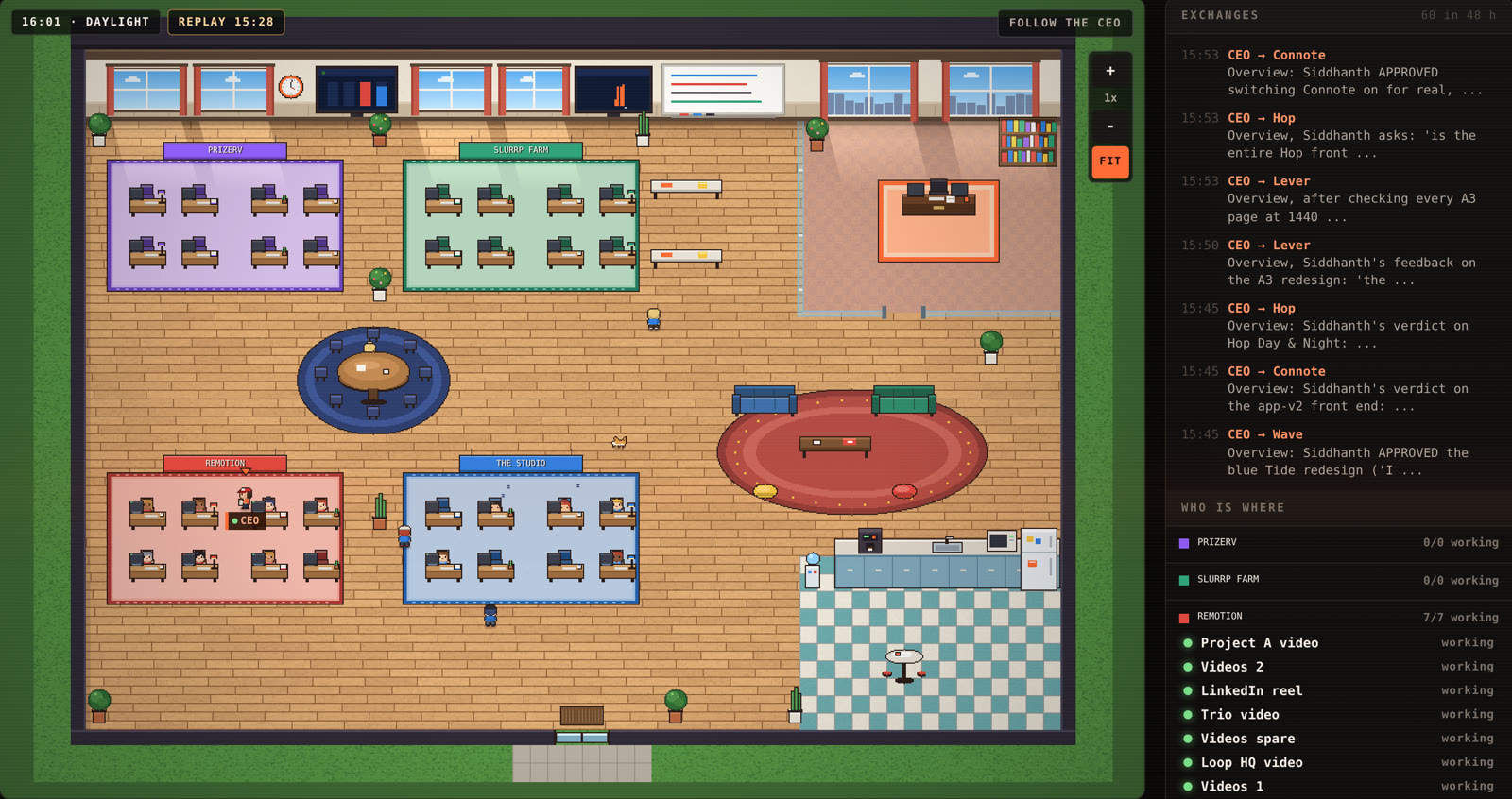
Every session is a person
Each Claude Code session sits at a desk in its project's room. The overview session walks each real message to the desk it is for, and the exchanges run down the side.
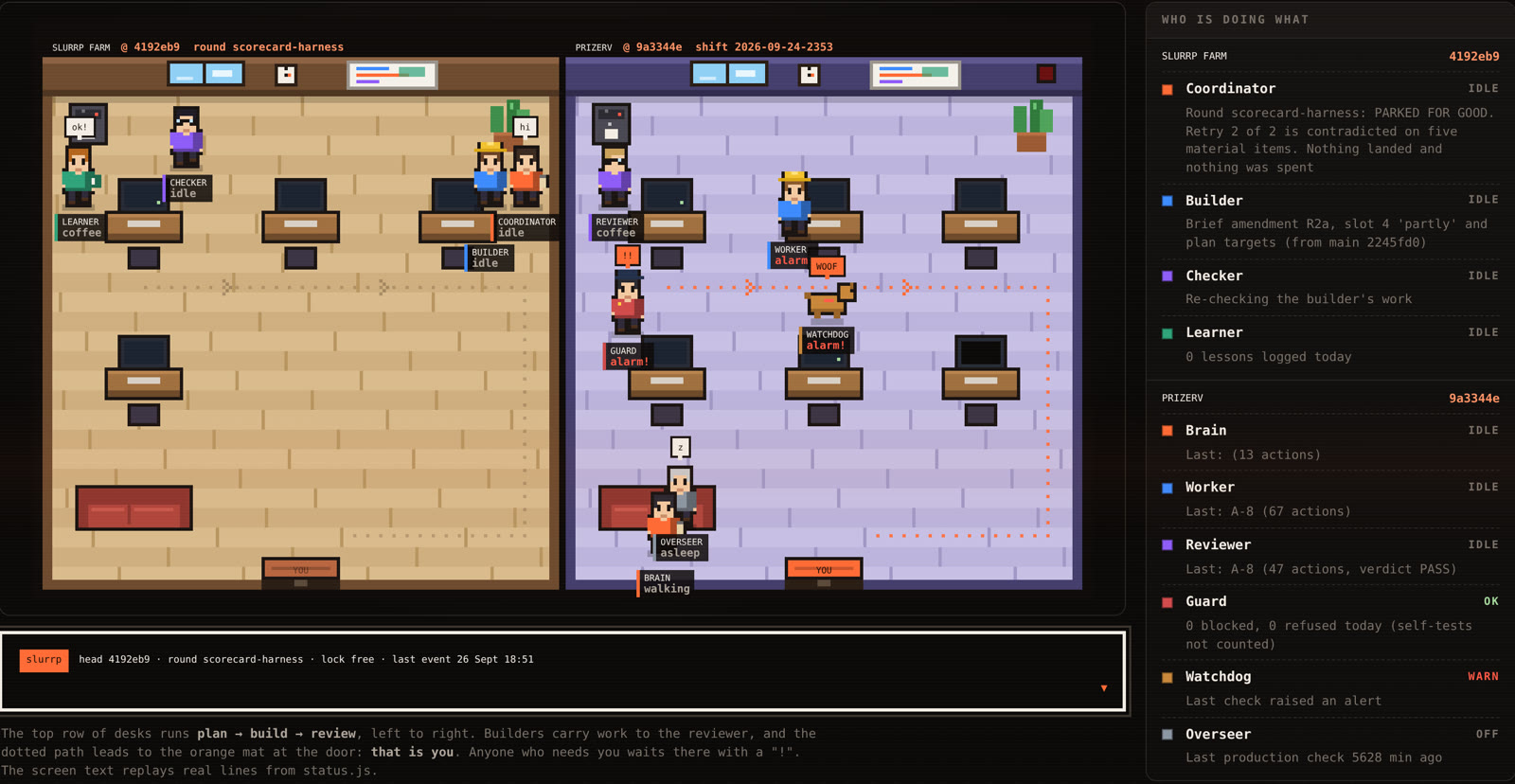
The loops, room by room
Each loop's roles at their desks, with plan, build and review along the top row. Anyone who needs a person waits at the door, on the orange mat that stands for you.
One data feed behind every view
Watcher scripts write one file, status.js. The page reads it, replays it as a live feed, and changes nothing in any repository.
The real Loop HQ page and its data from 27 September, shown at that time.
why it's useful
Builds run in parallel, and only checked work lands. The AI does the relentless, repetitive work on code and tests; I keep product, taste and decisions. About fifteen sessions worked through the night of 27 to 28 September.
technical specs
- The overview session: one Claude Code session holds the task list across six products, writes each brief and hands it to Claude Code sessions, local or in the cloud, running in parallel.
- Every change takes the same path: a brief, a builder session on its own branch, tests written first, an independent verifier that did not build it, one fix round, a pull request, and a person who merges. A task that fails twice stops and reports.
- Continuous integration decides whether a change passes. The verifier runs on a stronger model and is asked to find what is wrong.
- Guard hooks block writes to a production database, reads of secrets and unsafe pushes, so no session sits waiting on a permission prompt. The guard counts what it blocked and refused each day.
- A usage ledger tracks the five-hour and seven-day usage windows. At 90 per cent of the five-hour window the loop winds down: the task in hand is finished as far as its review, and nothing new starts.
- Work runs in 30-minute sprints with a short checkpoint digest, so the person can steer without watching.
- On Slurrp Farm, a coordinator hands each round to a builder and an independent checker, under a lock, with every round recorded in a ledger. A round still contradicted after two retries is parked.
- Watcher scripts read each loop's logs once a minute and write one data feed, status.js. The page only reads it.
- The office renderer draws that feed as a pixel office: each session is a person at a desk, working, idle or asleep from its last message, and the overview session walks each real message to its desk. Three or more sessions briefed within minutes meet at the round table.
- A terminal view shows the same feed as each loop's pipeline, its roles and their state, and a live tail of every change.