build
Dokimo
Practice that feels like the real test, for hiring and MBA admissions: 15 test types across 4 career tracks, every rule evidence-labelled.
the problem
Graduate hiring and MBA admissions now run through timed online tests: game-based assessments, numerical and logical reasoning, situational judgement, critical thinking, one-way video interviews and the GMAT. Each firm uses its own mix.
why it hurts
Most practice covers one test at a time and does not feel like the real thing, and it rarely says which of its rules are known and which are guesses. Candidates end up rehearsing the wrong format, or the wrong test for the firm.
what i built
Dokimo is one place to practise for all of them: 15 test types across 4 career tracks, from McKinsey Solve-style games and Watson-Glaser-style reasoning to one-way video interviews. You pick the firm or school you are applying to and it builds a track of the tests that firm uses, with a plan up to your test date. Every rule carries its evidence level, and scores say when they are estimates. I designed and built it. The film and the stills use a fictitious candidate.
The candidate in the film is fictitious, made up for filming.
how it works
The benchmark is the real test.
whyA mechanic, timing or scoring rule changes only on the provider's own material or on at least two independent candidate reports. Anything less stays as it is and is logged as an open question.
Label every rule with its evidence.
whyOfficial, several candidates, one candidate, a prep company, or our own design: each rule shows its level, so the known parts and the reasoned guesses are told apart on screen.
Every scenario has an answer the code can prove.
whyScenarios are generated from a seed, so any run can be replayed, and each carries a correct answer computed by code, which the debrief works through. The process score is labelled as an estimate.
in detail
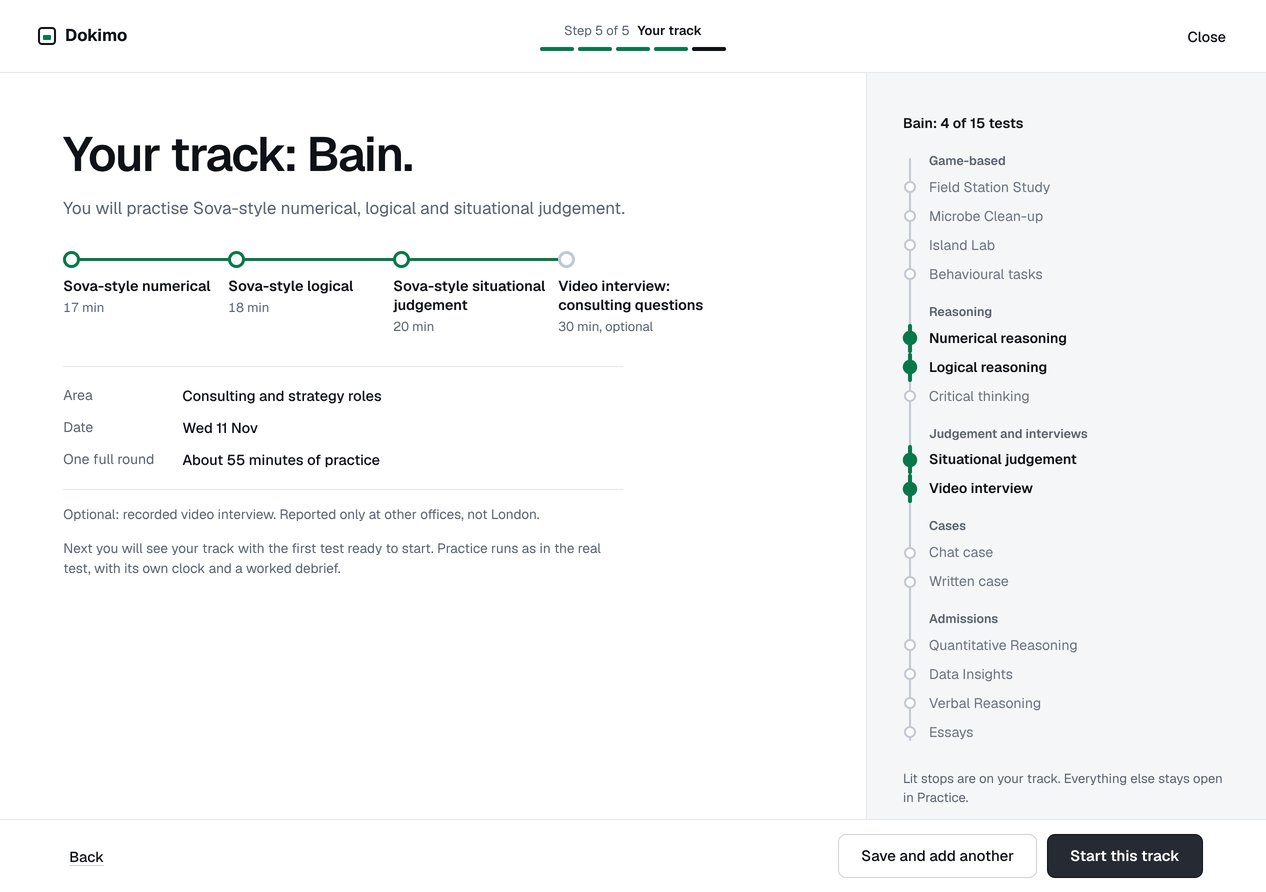
01 / 04
The end of setup: a consulting track of four tests with their minutes and the test date, and the matching tests lit on the route beside it. The candidate is fictitious.
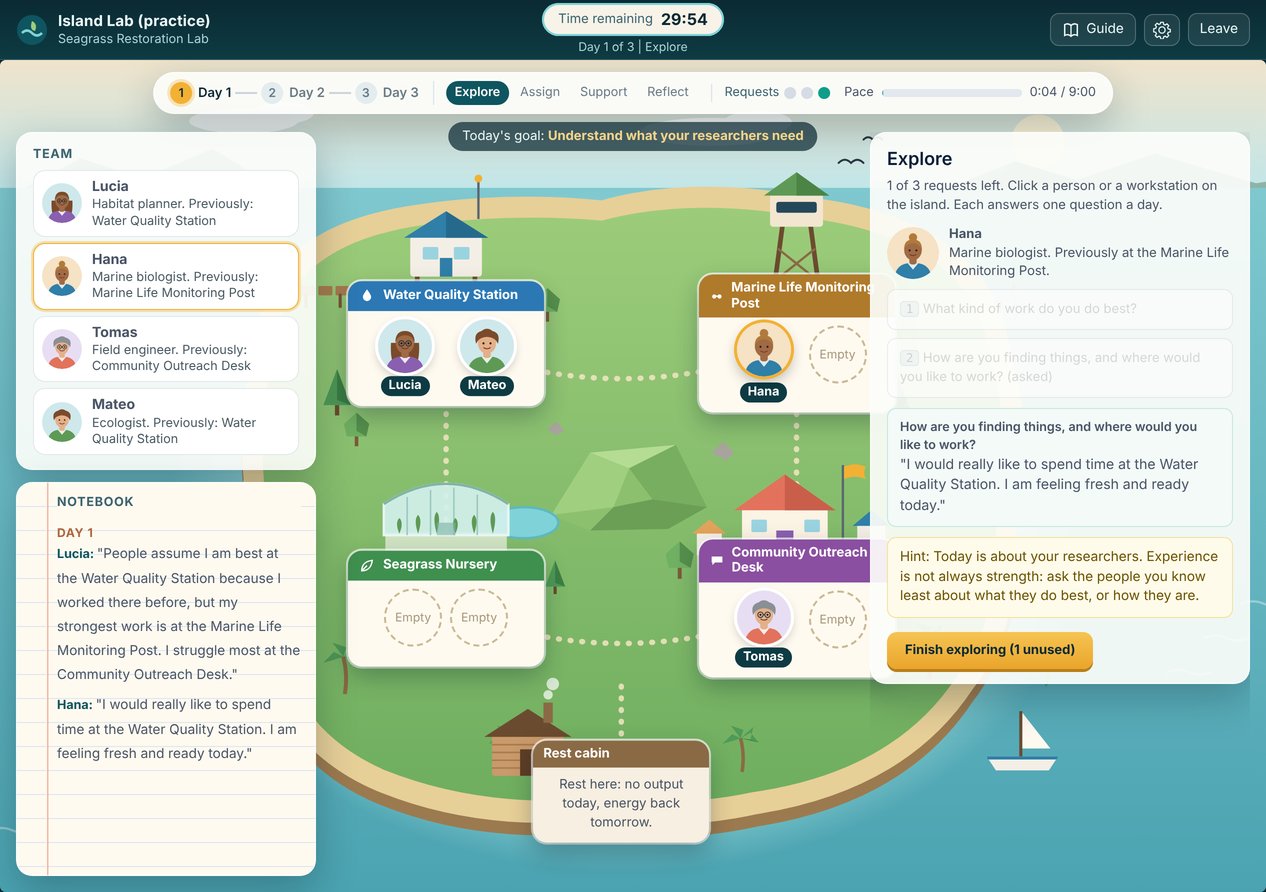
02 / 04
Island Lab in practice mode on day one: the island, the four researchers, and a notebook holding the first two answers.
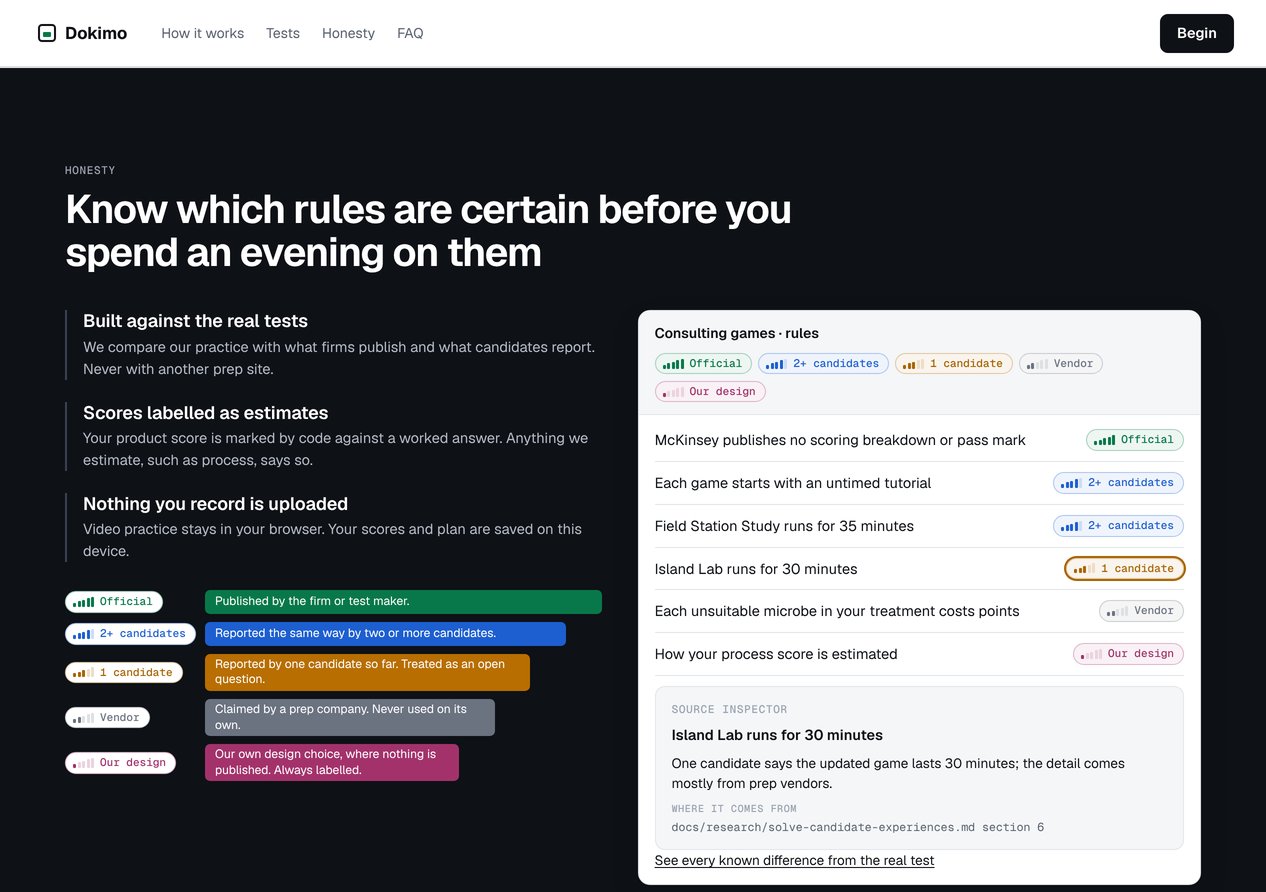
03 / 04
The five evidence levels, a list of game rules each carrying its level, and the source inspector open on one rule that rests on a single candidate's report.
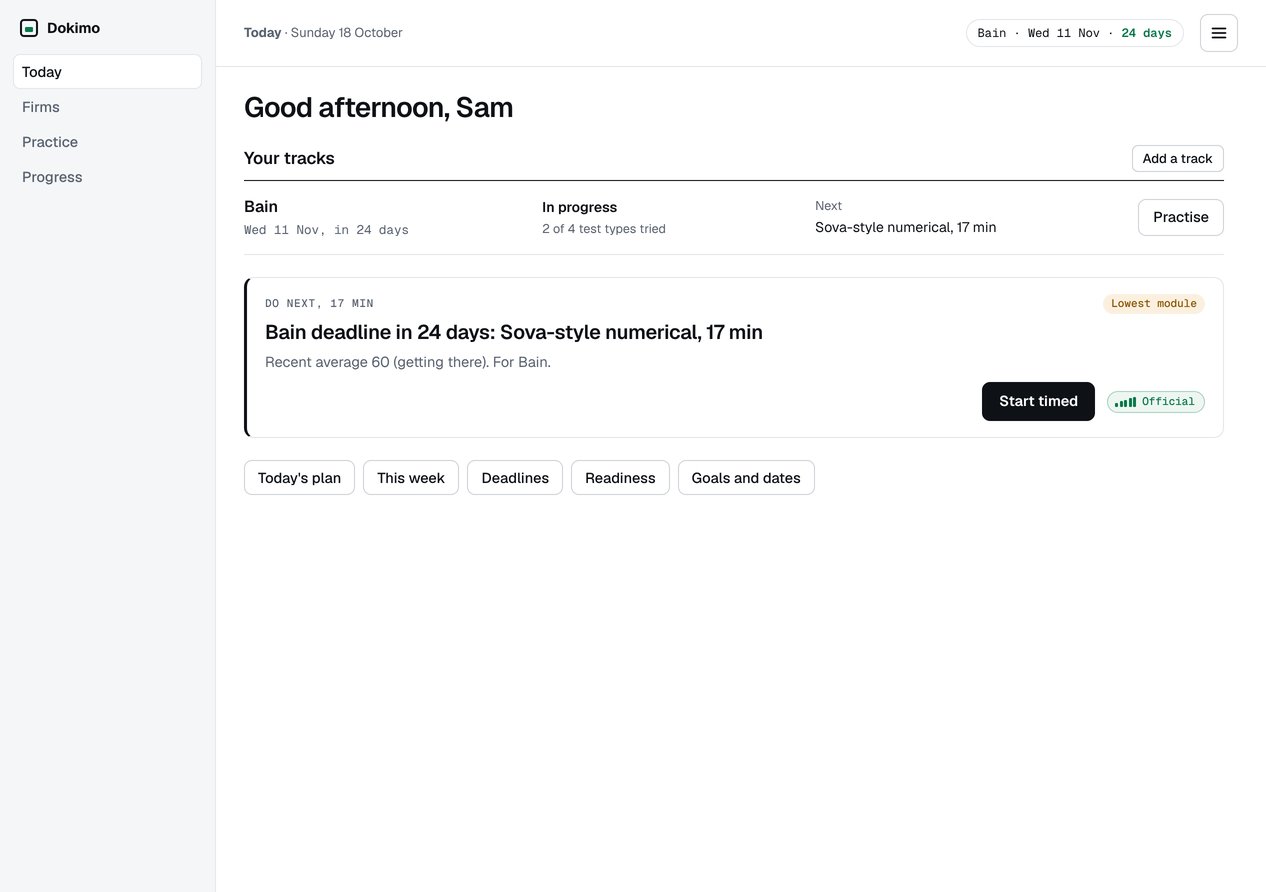
04 / 04
The Today screen on a track 24 days from the test, with the next practice to do and its evidence level.
why it's useful
One track per application, in the order you will meet the tests, with practice on the real clock and a worked debrief after every run. Because every rule is labelled, a candidate can see what to trust.
outcomes
100
users at launch
technical specs
- No server at run time: practice, scoring and the debrief all run in the browser, and progress is saved on the device.
- It ships as one JavaScript bundle on purpose, so a deploy can never break a test someone is in the middle of.
- No real test content is collected or stored. Candidates' debriefs cover structure and feel only.
live site
Visit the live site↗